Mis-code-ception

Radosław Bułat, github.com/radarek
KRUG, 17.10.2022
The goal is to
have fun
with unusual code.
Agenda
- Does Ruby understand SQL?
- How to check if a number is prime using regex?
- Writing code using only symbol characters.
- Deceptive code.
Does Ruby understand SQL?
SELECT `tags`.* FROM `tags`
[1] pry(main)> SELECT `tags`.* FROM `tags`
Errno::ENOENT: No such file or directory - tags
from (pry):1:in ``'
Do you see something interesting?
SELECT `tags`.* FROM `tags`
This SQL is syntatically valid Ruby code!
SELECT(`tags`.*(FROM(`tags`)))
`tags` # call system command "tags"
SELECT, FROM # method call
`x.*(y)` # x * y
Constant vs method
Array(1)   # method
Array()    # method
Array 1    # method
Array      # constant
Array.new  # constant.method
What about other SQL commands?
DROP TABLE IF EXISTS `tags`;
CREATE TABLE `tags`
  (id int);
ALTER TABLE `tags`
  ADD COLUMN name varchar(255);
INSERT INTO `tags`
  VALUES(1, "krug");
INSERT INTO `tags`
  VALUES(2, "ruby");
INSERT INTO `tags`
  VALUES(3, "programming");
SELECT `tags`.* FROM `tags`;
SELECT `tags`.* FROM `tags`
  WHERE name LIKE "%u%";
$ mysql -h host.docker.internal magic < demo.sql
id      name
1       krug
2       ruby
3       programming
id      name
1       krug
2       ruby
$ ruby -r./sql demo.sql
id      name
1       krug
2       ruby
3       programming
id      name
1       krug
2       ruby
Implementation idea
def DROP(...); end
def SELECT(...); end
# etc.
Conclusions
- Methods can have capital letters.
- Ruby distinguishes them from constants on syntax level.
- A method and a constant with the same names can coexist.
How to check if a number is prime using regex?
What is a prime number?
It is an integer number > 1 that is divisible only by itself and 1.
6 is not prime because it is divisible by 1, 2, 3 and 6.
7 is prime because it is divisible only by 1 and 7.
Regex? Like this?
def prime?(n)
  n.to_s.match? /^(2|3|5|7)$/
end
(0..100).select { prime?(_1) }
#=> [2, 3, 5, 7]
What about 11, 13 and others?
There is something more clever.
Ready?
def prime?(n)
  '1'*n !~ /^1?$|^(11+?)\1+$/
end
(0..100).select { prime?(_1) }
#=> [2, 3, 5, 7, 11, (...), 89, 97]
How does it work?
'1'*n !~ /^1?$|^(11+?)\1+$/


What about performance?
'1111111' =~ /^(11+?)\1+$/
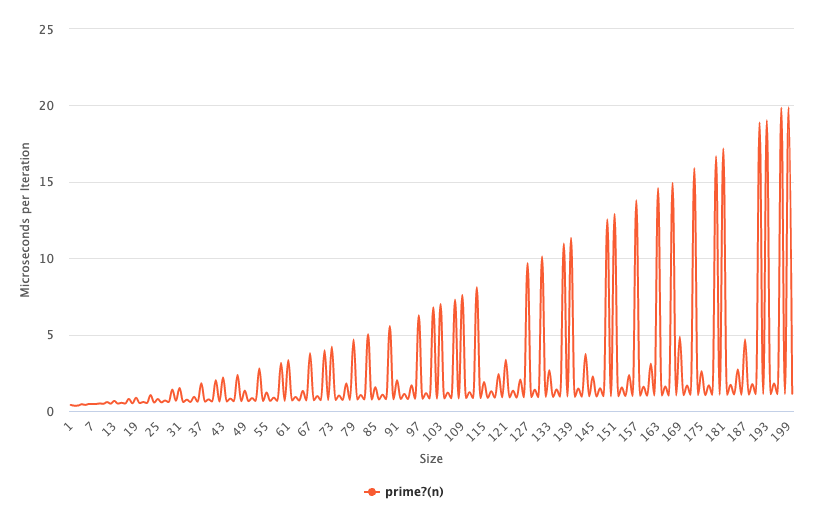
Conclusions
- Regexes are usefull but can be tricky
- Always test your regexes with different inputs
- Think about worst cases
- Don’t use it for primary number checking ;)
- Read the book “Mastering Regular Expressions”
Writing code using only symbol characters.
Is it possible to write any Ruby code using only these characters?
!"#$%&'()*+,-./:;<=>?@[\]^_`{|}~
Let’s start with something simple.
How to construct any string without using letters?
"Hello"
=>
"?????"
String#<<
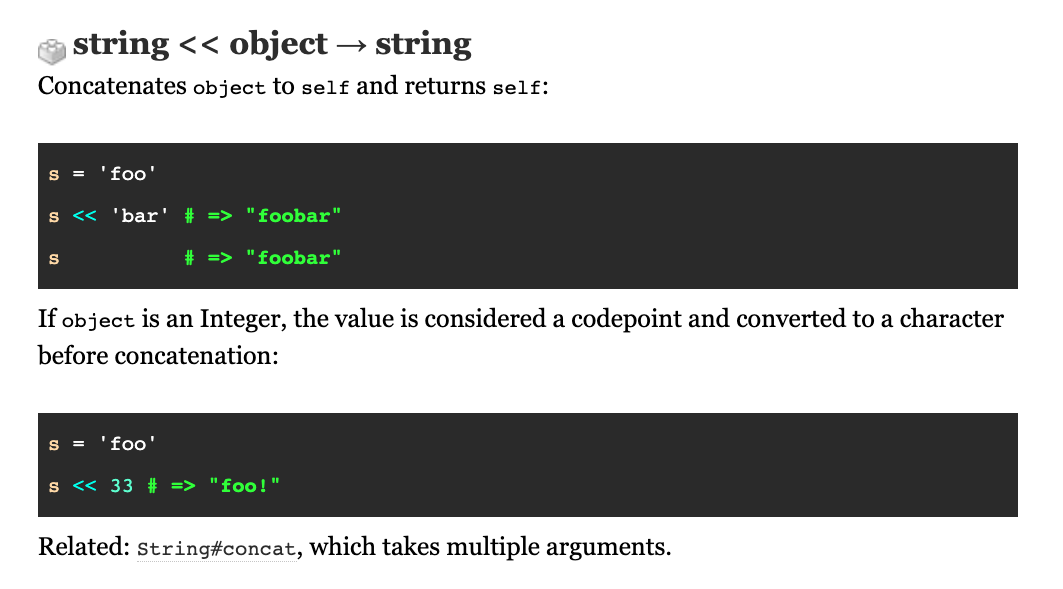
https://ruby-doc.org/core-3.1.2/String.html#method-i-3C-3C
''<<72<<101<<108<<108<<111
#=> "Hello"
How to create any integer using only symbol characters?
1
=>
?
$$/$$
'$'=~/$/
-~($$[-$$])
'>'<=>'<'
$$[-$$]**$$[-$$]
_=$$/$$ #=> 1
__=_+_  #=> 2
H - 72
_+_...+_ # repeat 72 times
# or
(__*(__*(__*(__*(__*(__*_))+_))))
_=$$/$$;__=_+_;''<<(__*(__*(__*(__*(__*(__*(__*(_-_)+_)))+_))))<<(__*(__*(__*(__*(__*(__*(__*(_-_)+_)+_)))+_))+_)<<(__*(__*(__*(__*(__*(__*(__*(_-_)+_)+_))+_)+_)))<<(__*(__*(__*(__*(__*(__*(__*(_-_)+_)+_))+_)+_)))<<(__*(__*(__*(__*(__*(__*(__*(_-_)+_)+_))+_)+_)+_)+_)
How to execute code from a string?
eval(string)
_=$$/$$;__=_+_
p eval(''<<(__*(__*(__*(__*(__*(__*(_-_)+_)+_))+_))))
What about symbolizing eval?
Ready?
->(&_){
  _['','eval','<code>']
}[&:"#{'send'}"]
Let’s write a compiler.
def decompose(n)
  n == 0 ? '(_-_)' : '('+'__*'+decompose(n/2)+'+_'*(n%2)+')'
end

def s(str)
  ["''", *str.chars.map { decompose(_1.ord) }].join('<<')
end

def compile(code)
  "_=$$/$$;__=_+_;->(&___){___[''," +
  "#{s('eval')},#{s(code)}]}[&:\"\#{#{s('send')}}\"]"
end

puts compile(ARGF.read)
$ ruby compiler.rb helloworld.rb
_=$$/$$;__=_+_;->(&___){___['',''<<(__*(__*(__*(__*(__*(__*(__*(_-_)+_)+_)))+_))+_)<<(__*(__*(__*(__*(__*(__*(__*(_-_)+_)+_)+_))+_)+_))<<(__*(__*(__*(__*(__*(__*(__*(_-_)+_)+_)))))+_)<<(__*(__*(__*(__*(__*(__*(__*(_-_)+_)+_))+_)+_))),''<<(__*(__*(__*(__*(__*(__*(__*(_-_)+_)+_)+_)))))<<(__*(__*(__*(__*(__*(__*(__*(_-_)+_)+_)+_))+_))+_)<<(__*(__*(__*(__*(__*(__*(__*(_-_)+_)+_)+_))+_)))<<(__*(__*(__*(__*(__*(__*(__*(_-_)+_)+_)+_)))+_)+_)<<(__*(__*(__*(__*(__*(__*(_-_)+_))))))<<(__*(__*(__*(__*(__*(__*(_-_)+_))))+_))<<(__*(__*(__*(__*(__*(__*(__*(_-_)+_)))+_))))<<(__*(__*(__*(__*(__*(__*(__*(_-_)+_)+_)))+_))+_)<<(__*(__*(__*(__*(__*(__*(__*(_-_)+_)+_))+_)+_)))<<(__*(__*(__*(__*(__*(__*(__*(_-_)+_)+_))+_)+_)))<<(__*(__*(__*(__*(__*(__*(__*(_-_)+_)+_))+_)+_)+_)+_)<<(__*(__*(__*(__*(__*(__*(_-_)+_))))))<<(__*(__*(__*(__*(__*(__*(__*(_-_)+_))+_))+_)+_)+_)<<(__*(__*(__*(__*(__*(__*(__*(_-_)+_)+_))+_)+_)+_)+_)<<(__*(__*(__*(__*(__*(__*(__*(_-_)+_)+_)+_)))+_))<<(__*(__*(__*(__*(__*(__*(__*(_-_)+_)+_))+_)+_)))<<(__*(__*(__*(__*(__*(__*(__*(_-_)+_)+_)))+_)))<<(__*(__*(__*(__*(__*(__*(_-_)+_)))))+_)<<(__*(__*(__*(__*(__*(__*(_-_)+_))))+_))<<(__*(__*(__*(__*(_-_)+_))+_))]}[&:"#{''<<(__*(__*(__*(__*(__*(__*(__*(_-_)+_)+_)+_)))+_)+_)<<(__*(__*(__*(__*(__*(__*(__*(_-_)+_)+_)))+_))+_)<<(__*(__*(__*(__*(__*(__*(__*(_-_)+_)+_))+_)+_)+_))<<(__*(__*(__*(__*(__*(__*(__*(_-_)+_)+_)))+_)))}"]
$ ruby compiler.rb helloworld.rb  | ruby
Hello World!

What if…
$ ruby compiler.rb compiler.rb > compiler2.rb

Conclusions
- Generating code is fun
- Generating useless code is uber fun ;)
Deceptive code
$ ls
innocent_code.rb
$ ruby innocent_code.rb
This code is evil
Oh no 😱!
$ cat innocent_code.rb
puts "This code is innocent"
How?
File.write(__FILE__, <<CODE)
puts "This code is innocent"
CODE
puts "This code is evil"
$ ls
innocent_code2.rb
$ cat innocent_code2.rb
puts "This code is innocent"
$ more innocent_code2.rb
puts "This code is innocent"
$ ruby innocent_code2.rb
This code is evil
$ cat innocent_code2.rb
puts "This code is innocent"
How?
puts "This code is evil"||"^H^H^H^H^H^H^H^Hinnocent"
Conclusions
- Don’t trust your intuition
- If you think you know how something works then … you may be wrong